
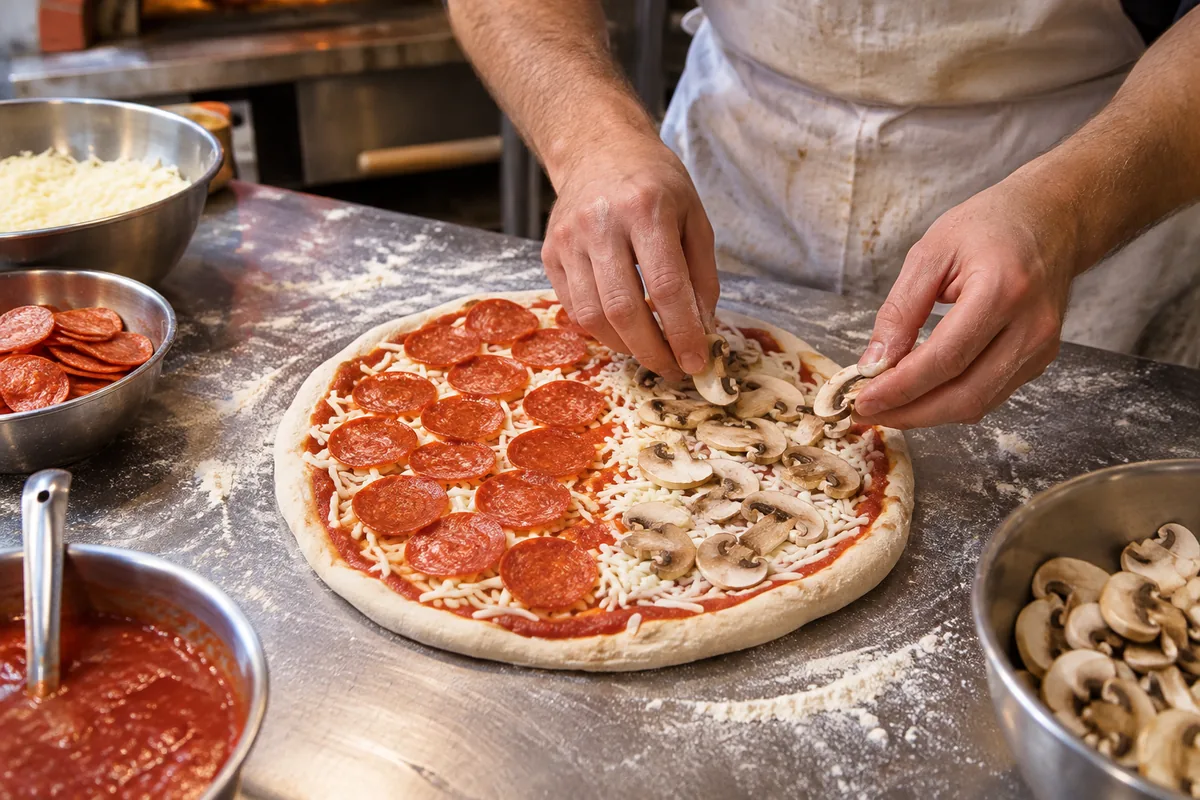
Choose the rule before choosing the buttons
Should a half-and-half pizza cost the same as the more expensive half, the average of two recipes, or a base price plus individual toppings? There is no universal operating answer. The important starting point is a written menu rule that your team can explain before taking payment. Decide what happens when customers combine specialty recipes, change crusts, or add extra toppings to only one side.
This question is more specific than simply asking whether a register supports modifiers. A system might accept a note saying half mushroom without calculating the intended charge. Use the pizza ordering workflow guide to separate order capture from production, then bring actual menu examples to the supplier. Ask for a demonstration rather than assuming every pizza configuration works identically.
Test size, placement, and quantity separately
Build a small test sheet with a plain pizza, two different halves, an extra topping on one half, and a premium crust. Repeat those examples for each size you sell. Write the expected price before entering the order. That makes it possible to identify an incorrect configuration without debating the result at the counter. Check whether extra means double the ingredient, a separate surcharge, or both.
Placement must remain clear after a correction. Remove a topping, move it to the other half, and change the pizza size. Inspect the updated total and kitchen instructions after each step. A cashier should not need to cancel the whole order just to recover from a normal customer change. The POS buyer's guide can help turn these examples into a repeatable vendor evaluation.
Make the kitchen ticket match the receipt
Cashiers and cooks need different levels of detail, but the underlying order should agree. The customer receipt should explain the purchased item and charges. The preparation ticket should identify size, crust, sauce, and which toppings belong on each side. Avoid instructions that depend on the cashier standing beside the cook to explain a shorthand message. Ask staff to describe an unfamiliar ticket without assistance.
Check the same build across phone, counter, and any supported online channel. If one channel cannot represent a combination, decide whether to restrict that choice or document an approved workaround. Do not promise customers a configuration that production cannot reliably interpret. Review the platform overview for the broader evaluation context, and confirm any proposed connection or integration directly with the provider.
Keep a short acceptance checklist
Before approving a menu change, ask a new cashier and an experienced cook to run the test sheet together. Record the expected total, actual total, receipt wording, and preparation instructions. Include an unavailable topping and a customer changing their mind. Those ordinary exceptions reveal more than a demonstration of one perfect order. Keep the approved examples with the menu setup notes so future changes can be checked against them.
Give one manager responsibility for maintaining the rule and approving exceptions. Review mistakes by cause: unclear policy, wrong button, incorrect calculation, or ambiguous ticket. Fix the cause instead of adding another handwritten instruction. When discussing Freedom POS, use the contact page to request a walkthrough of your own combinations and verify which requirements are currently supported before making a purchasing decision.